
Director
Tu Kuang-chi
112 years · Zhejiang, China · 30 films
Tu Guang Qi (1914 -1980), also known as 屠光啟. His original name was Tu Guangqi, and he was from Shaoxing, Zhejiang. He originally studied at Hangchow University. In 1935, he was admitted to the National School of Drama in Nanjing, graduating in 1937. In the same year, the War of Resistance broke out, and he served as a drama section staff member in the Seventh Division of the Third Department of the Political Bureau of the Military Affairs Commission. In 1939, he moved from Wuhan to the Shanghai foreign concessions and joined the Shanghai Drama Society to perform in stage plays, including Flowers Spilling Tears, The Deep Abyss, and Ge Nianniang. Ge Nianniang was a massive box office hit that caused a sensation at the time. Zhang Shankun then adapted the stage play into a film titled Ge Nianniang (1939) under the name of Huacheng Film Company. Tu reprised his original role in the film, which was also the first motion picture he acted in. After the victory of the War of Resistance, he adapted the stage play The Wild Rose into the film Spy Number One (1946) for the Third Studio of the Central Motion Picture Corporation in Peiping (now Beijing), starring Ouyang Shafei. The film tells the heroic story of a Chinese female spy lurking in the home of a traitor; with its twists and thrilling romance, it was a tremendous box office success and one of the most famous post-war Chinese films, which also brought Tu widespread fame. Following that, he directed A Tragic Marriage (1947), adapted from Xu Zhenya's famous tragic novel Jade Pear Spirit, which was also very popular. In addition, he established his own Qihua Film Company. In 1950, invited by Zhang Shankun, he moved from Shanghai to Hong Kong to make films. The first film he directed in Hong Kong was To See the Clouds Roll (1950), produced by Zhang Shankun's Far East Film Company. Angel and Devil (1952), starring Chen Yunshang and marking the resumption of operations for Zhang Shankun's Xinhua Film Company, was also directed by Tu. During the 1950s, he primarily worked as a director for Xinhua Film Company, among which General Chai and Lady Balsam (1953) and The Dawn of China's Revolution (1953), both starring Li Lihua and based on historical figures, were his most successful and famous works. In 1963, Xinhua Company relocated to Taiwan and ended its film production operations in Hong Kong. Tu switched to directing Cantonese-language films for Wong Cheuk-hon's Ling Kwong Company. During the same period, he also directed several Teochew-dialect opera films. He temporarily stopped directing to write wuxia novels. In 1967, he joined Hong Kong's Cathay Organisation. The first wuxia film he directed for Cathay was The First Sword (1967), which was a solid box office success and also propelled actress Chen Manling to stardom. Afterward, he directed multiple wuxia films for Cathay until Cathay ended its Hong Kong film production operations in 1971. Tu's final directed film was Crush (1972). His last participation in film production was acting in The Valiant Ones (1975), directed by King Hu. He immigrated to the United States in 1973 and passed away from illness in Los Angeles on May 30, 1980.
Best known for
Filmography 30

The Valiant Ones
1974 · Govenor Zhu Zhe

Crush
1972 · Director

Lotus Camp
1969 · Director

The Violet Mansion
1969 · Director, Screenplay

The First Sword
1967 · Screenplay, Director

Double Exposure
1966 · Screenplay, Director

Lady Spy No. 1
1965 · Screenplay
One Murder, Five Deaths
1963 · Director, Writer

The Notorious Woman Thief
1963 · Screenplay, Director

The Flaming Mountain
1962 · Writer

The Heroic Lovers from the Tomb
1961 · Director

A Shadow over the Chateau
1960 · Writer, Director

The Daring Gang of Nineteen from Verdun City
1960 · Director

Where Is My Bride?
1958 · Writer, Director

Love & Obligation
1955 · Writer, Director

The Great Wall of China
1955 · Director

The 72 Martyrs of Canton
1954 · Director

The Mortal Wind
1954 · Director, Writer
General Chai and Lady Balsam
1953 · Director

Meal Time
1953 · Writer, Director

Tears of Songstress
1953 · Director

Sorrowful Glory
1953 · Director, Writer
The Moon-Blanch'd Land
1952 · Writer, Director
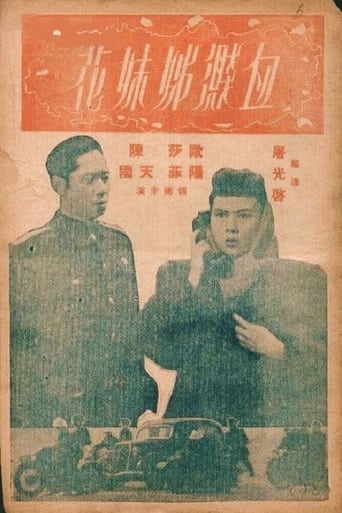
Murderer Among the Sisters
1948 · Director